
The demand for white-collar gig roles saw an 11 per cent uptick year-on-year in March, amid muted hiring across industries due to global headwinds and job cuts, according to a recent report. The month saw white-collar hiring in India rise 2 per cent in terms of job posting activity compared to the same period the previous year, according to the report by staffing portal foundit.in (formerly Monster APAC and ME). Sectors such as retail, telecom, and Travel and Tourism saw the biggest growth in demand on an annual basis.

By staying informed and focusing on legitimate job openings, candidates can navigate the job market more effectively and safeguard their career aspirations.

India's manufacturing sector growth moderated in August as output and sales rose at slowest rates since January, while competitive pressures and inflation concerns hampered business confidence, a monthly survey said on Monday. The seasonally adjusted HSBC India Manufacturing Purchasing Managers' Index (PMI) stood at 57.5 in August, below July's reading of 58.1 but above its long-run average of 54.0, signalling a substantial improvement in operating conditions.
India's manufacturing sector saw a slower growth rate for the second straight month in May but stayed firmly in expansion mode with global sales increasing to the greatest extent in over 13 years, a monthly survey said on Monday. The seasonally adjusted HSBC India Manufacturing Purchasing Managers' Index (PMI) fell from 58.8 in April to 57.5 in May, signalling a slower but substantial improvement in the health of the sector. The index had climbed to a 16-year high of 59.1 in March.
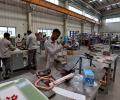
India's manufacturing sector growth fell to a joint 11-month low of 56.5 in November, restricted by competitive conditions and inflationary pressures amid a softer increase in factory orders, a monthly survey said on Monday. The seasonally adjusted HSBC India Manufacturing Purchasing Managers' Index (PMI) fell from 57.5 in October to 56.5 in November, signalling a softer improvement in the health of the sector. However, the pace of growth remained above its long-run average.
The growing decline of MTech applicants in Indian colleges is due to multiple factors, including outdated curricula, poor return on investment and lucrative non-engineering alternatives, say experts.

Tax evaders, BEWARE! The Income Tax department is using AI data analytics to bust fake deductions, flag HRA fraud, and trace digital footprints.

India's e-commerce market alone is projected to reach $200 billion by 2026, making it a prime industry for ambitious entrepreneurs, explains rediffGURU Harsh Bharwani.
India's manufacturing sector activities moderated in December but output remained in the growth territory, amid slower rise in sales and new orders, even as business sentiment was dampened by concerns surrounding supply-chain disruptions, COVID-19 and inflationary pressures, a monthly survey said on Monday. The seasonally adjusted IHS Markit India Manufacturing Purchasing Managers' Index (PMI) eased to 55.5 in December, from November's ten-month high of 57.6. The December data pointed to a "substantial, albeit slower, rises in sales and output", the survey said, adding that the latest quarterly reading was at 56.3, its highest since the final quarter of fiscal year 2020/21.

Many unauthorised migrants originate from Punjab and Gujarat, states known for high migration aspirations rather than political instability.

India's services sector activity witnessed a sharp upturn in August on the back of stronger gains in new business, ongoing improvements in demand conditions and job creation, a monthly survey said on Monday. The seasonally adjusted S&P Global India Services PMI Business Activity Index rose from July's four-month low of 55.5 to 57.2 in August, amid a quicker upturn in business activity and the sharpest rise in employment for over 14 years. For the thirteenth straight month, the services sector witnessed an expansion in output.

Manufacturing sector activities in India moderated for the second straight month in July as rates of expansion in output and new orders eased slightly, a monthly survey said on Tuesday. The seasonally adjusted S&P Global India Manufacturing Purchasing Managers' Index (PMI) eased to 57.7 in July from 57.8 in June. Despite the fall, the Indian manufacturing sector maintained strong growth momentum at the start of the third quarter amid ongoing buoyant demand, the survey said.

The cost of not vaccinating the entire population quickly will be far higher than bearing the entire cost of vaccination, points out Prosenjit Datta.

Quiet hiring allows employees to expand their skill sets, making them more versatile and valuable to the organisation, says Sonica Aron, founder of the HR consultancy firm, Marching Sheep.

Manufacturing sector activities in India moderated in June from a 31-month high in May, but output remained in the growth territory, as new work orders expanded sharply amid favourable demand conditions, a monthly survey said on Monday. The seasonally adjusted S&P Global India Manufacturing Purchasing Managers' Index (PMI) fell from 58.7 in May to 57.8 in June. Despite the fall, the headline figure pointed to a considerable improvement in operating conditions, the survey said, adding that the demand strength positively impacted several other measures such as sales, production, stock building and employment.

'As we enter 2025, it must be acknowledged that there is a convergence of capital, influential people (from business and politics) and technology deciding the destiny of others in the name of pride, patriotism, nationalism, nation building, all of it thinly veiled disguises for personal profit and glory,' asserts Shyam G Menon.

India's manufacturing sector activity moderated in January amid slower increase in total sales, and headcounts were broadly unchanged amid sufficient staff numbers to cope with current requirements, according to a monthly survey. The seasonally adjusted S&P Global India Manufacturing Purchasing Managers' Index (PMI) fell from December's recent high of 57.8 to 55.4 in January, as factory orders and production rose at sharp, albeit slower, rate. The January PMI data pointed to an improvement in overall operating conditions for the 19th straight month.

'Is the Agniveer scheme or their post-retirement re-employment in paramilitary forces or in the state governments the BJP's answer to the crying need on the job front?' 'Or, even Finance Minister Sitharaman's one-year internship scheme in the public and private sector, is it a permanent solution, either?', asks N Sathiya Moorthy.

'We believe there will be a full shutdown for four weeks and a partial shutdown for eight weeks.' 'Hence, economic activity is unlikely to normalise before the end of May.'

'We have essentially tried to set out an agenda for the next five years and it, in essence, represents the political commitment to that agenda.'
India's manufacturing sector activities witnessed faster growth in April amid quicker increases in production as well as factory orders, and renewed expansion in international sales, a monthly survey said on Monday. The seasonally adjusted S&P Global India Manufacturing Purchasing Managers' Index (PMI) rose from 54.0 in March to 54.7 in April, as a retreat of COVID-19 restrictions continued to support demand. The April PMI data pointed to an improvement in overall operating conditions for the tenth straight month. In PMI parlance, a print above 50 means expansion, while a score below 50 denotes contraction.

Salary increments in India will touch a five-year high of 9.9 per cent in 2022 as organisations are planning to invest in new-age capabilities to build a resilient workforce amid strong economic recovery and positive business sentiment, a survey said on Wednesday. According to leading global professional services firm Aon's 26th Salary Increase Survey in India, organizations across industries project a 9.9 per cent salary increase in 2022, compared to 9.3 per cent in 2021. The study that analysed data across 1,500 companies from more than 40 industries, noted that the industries with the highest projected salary increases are e-commerce and venture capital, hitech/IT and IT enabled services (ITeS) and life sciences.
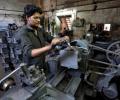
India's manufacturing sector activities witnessed the strongest rate of growth in three months in July amid improved demand conditions and easing of some local COVID-19 restrictions, a monthly survey said on Monday. The seasonally adjusted IHS Markit India Manufacturing Purchasing Managers' Index (PMI) rose from 48.1 in June to 55.3 in July, pointing to the strongest rate of growth in three months. In PMI parlance, a print above 50 means expansion while a score below 50 denotes contraction.

The forthcoming budget needs to delay fiscal consolidation, instead should focus more on supporting the pandemic battered-economy and boost consumption demand by offering income tax soaps and cutting fuel taxes, says a report. In a pre-budget report, India Ratings said it expects the new budget to consolidate and strengthen the plan set out in the last budget, rather than trying out new things by continue with the revenue and capital expenditure pattern of FY'22 to provide stability and consolidation to the past/ongoing efforts, and to focus on boosting demand by generating employment opportunities in areas/sectors that have been impacted more by the pandemic. The report therefore expects the finance minister to delay fiscal consolidation and make it to be a gradual and calibrated process, thus ensuring the necessary fiscal support that the economy needs is available till the recovery acquires its own momentum.
Manufacturing activities in India remained robust and price pressures were contained in October as new orders and production rose at a slower but stronger pace, according to a monthly survey released on Tuesday. The seasonally-adjusted S&P Global India Manufacturing Purchasing Managers' Index (PMI) was up from 55.1 in September to 55.3 in October. The October PMI data pointed to an improvement in overall operating conditions for the 16th straight month.

'The focus needs to shift towards the ability to collect payments, particularly in tier-3 to tier-4 areas where acceptance is still lacking.'

Unit-linked plans or Ulips continue to be expensive compared to other instruments, say certified financial planners.

Bolstered by improved domestic demand, India's services sector expanded for the fourth consecutive month in January as business activities quickened and rising business optimism is set to sustain the growth momentum, a monthly survey said on Wednesday. The seasonally-adjusted India Services Business Activity Index rose from 52.3 in December to 52.8 in January, pointing to a quicker expansion in output. The index was above the critical 50 mark that separates growth from contraction for the fourth month in a row during January.

Firms hired additional hands to keep up with the production demand
India's manufacturing sector growth steadied in May, with new orders and production increasing at similar rates to those registered in the previous month, while demand showed signs of resilience and improved further in spite of another uptick in selling prices, a monthly survey said on Wednesday. The seasonally adjusted S&P Global India Manufacturing Purchasing Managers' Index (PMI) stood at 54.6 in May, little changed from 54.7 in April, pointing to a sustained recovery across the sector. The May PMI data pointed to an improvement in overall operating conditions for the eleventh straight month.

The S&P BSE Auto Index has been one of the biggest outperformers among sectoral indices over the past year with returns of 26 per cent. By comparison, the benchmarks - the National Stock Exchange Nifty50 and the S&P BSE Sensex - managed about 6-8 per cent during this period. Improving demand, falling raw material costs, and rising product realisations, led by the premiumisation of portfolios, have led to a revision of growth estimates and upgrades by domestic brokerages.

An average of 30-40 per cent automation is standard across all big automobile plants in the country

Cash registers are ringing more frequently at hotels and resorts with the return of the big fat Indian wedding after a two-year hiatus. This comes even as the small and intimate ceremonies - which became popular during the pandemic - are also set to keep those employed in the hospitality sector on their toes. As many as 2.5 million marriages are expected to get solemnised during the wedding season that gets underway from next week and stretches on till April, according to industry estimates.

Stocks of public sector undertakings (PSUs) have been on fire in the past year as investors cheered an improvement in key operating metrics and embraced counters of these state-owned enterprises, analysts suggest. The S&P BSE PSU Index has gained over 90 per cent in the past year, rising much higher than the S&P BSE Sensex, which has rose nearly 19 per cent during this period, according to ACE Equity data. The BSE PSU Index, reports show, has delivered a compound annual growth rate (CAGR) of 28 per cent (including dividends reinvestments) over five years and risen by almost 60 per cent in the past year.

India's services sector activity expanded at the strongest pace in ten-and-a-half years in October, driven by a substantial upturn in business activity amid favourable demand conditions, a monthly survey said on Wednesday. Companies indicated that a notable pick-up in new business led to the fastest expansion in output in over a decade and as a result more jobs were created, even though business confidence remained subdued due to growing inflationary concerns. The seasonally adjusted India Services Business Activity Index rose from 55.2 in September to 58.4 in October, signalling the strongest rate of growth in ten-and-a-half years.

India's services sector activity surged to a seven-year high in January driven by sharp increase in new business orders, leading to job creation and business optimism amid favourable market conditions, a monthly survey said on Wednesday. The IHS Markit India Services Business Activity Index rose from 53.3 in December to 55.5 in January, signalling the strongest upturn in output in seven years.

'The pandemic had a significant impact on child trafficking.' 'With economic hardships, traffickers exploited the situation to target desperate parents and children.'

Official sources say that the finance ministry is aware of the possible spike in smuggling activity and has already asked intelligence agencies to tighten their vigilance and come down on the unofficial entry of gold into India.

The expansion in total new orders was supported by greater sales to international markets

Prime Minister Narendra Modi on Saturday announced the adoption of the New Delhi Leaders Declaration, a significant victory for India's G20 presidency that came amid increasing tensions and divergent views over the Ukraine conflict.
